
Reviewed by a gastroenterologist. All evidence sourced from peer-reviewed clinical research.
| Key Takeaways Nearly 1 in 3 Indians has NAFLD, often with no noticeable symptoms at allLosing just 5 to 10% of your body weight can meaningfully reduce liver fat and reverse early-stage damageDiet changes, structured exercise, and newer medications like GLP-1 agonists offer proven, science-backed paths to recovery |
If you have been told your liver is “fatty”, or if you are managing unexplained weight gain, you are in the right place.
This guide walks you through the evidence on why fatty liver and body weight are so deeply connected, and exactly what you can do about both.
SECTION 1
What Exactly Is Fatty Liver Disease, and Why Are So Many Indians Getting It?
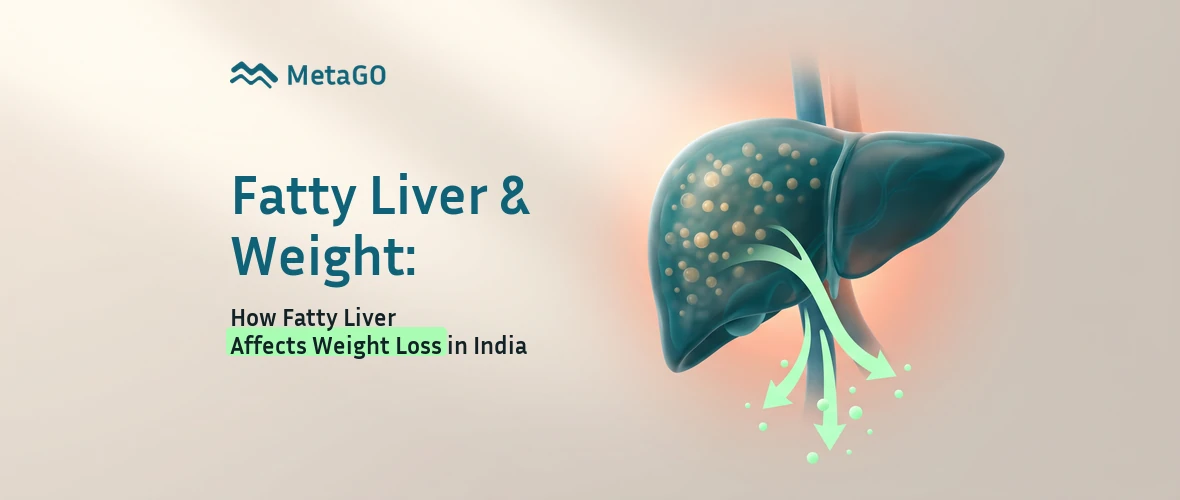
Fatty liver disease happens when fat makes up more than 5% of your liver’s total weight. The medical term is non-alcoholic fatty liver disease, or NAFLD, and it affects people who drink little to no alcohol.
In its early stage, the condition is called simple steatosis: fat accumulates in liver cells with minimal inflammation or cell damage.
Left unaddressed, it can progress to non-alcoholic steatohepatitis (NASH), a more serious form involving active liver inflammation and cell injury.
The scale of the problem across India is significant. A 2019 systematic review in the Journal of Clinical and Experimental Hepatology estimated that NAFLD affects approximately 38.6% of Indians, higher than the global average of 25%.
That means nearly 4 in 10 people reading this guide may already have some degree of fatty liver, often without knowing it.
The concern is real. NASH can advance to liver fibrosis, cirrhosis, and in some cases, liver cancer. Catching it early and acting on it makes a significant difference in long-term outcomes.
NAFLD Stages at a Glance
| Stage | Medical Term | What Is Happening |
|---|---|---|
| 1 | Simple Steatosis | Fat buildup in liver cells; minimal inflammation or damage |
| 2 | NASH | Fat + active inflammation + liver cell injury |
| 3 | Fibrosis | Scar tissue begins forming in the liver |
| 4 | Cirrhosis | Advanced scarring; significantly impaired liver function |
| 5 (rare) | HCC | Hepatocellular carcinoma (liver cancer) |
SECTION 2
Is Your Weight Causing Your Fatty Liver, or Is Your Fatty Liver Causing Weight Gain?
This is the question most people never think to ask — and the honest answer is: both.
Excess body fat, especially abdominal fat (visceral adiposity), drives insulin resistance. When your cells stop responding properly to insulin, your liver compensates by producing and storing more fat.
A landmark 2015 study in Gastroenterology found that each 1% reduction in body weight corresponded to a meaningful reduction in liver fat, even without any medication.
But the relationship goes both ways. A fatty, inflamed liver disrupts the metabolic hormones that regulate appetite and fat storage, making it harder to maintain a healthy weight. When the liver is inflamed, its ability to efficiently process fats and regulate blood sugar becomes impaired.
This creates a cycle: weight gain worsens liver fat, and liver dysfunction makes weight harder to manage.
The reassuring part? Breaking this cycle at any point produces results in both directions.
SECTION 3
Could You Have Fatty Liver Right Now and Not Know It? (Watch for These Signs)
Most people with NAFLD have no symptoms at all in the early stages. This is precisely why it so often goes undiagnosed until a routine blood test or abdominal ultrasound picks it up.
When symptoms do appear, they may include:
- Persistent fatigue that is difficult to explain
- Mild discomfort or a sense of heaviness in the upper right abdomen
- Elevated liver enzymes (ALT, AST) found on a routine blood test
- Unexplained weight gain, particularly around the midsection
Symptoms that may point to more advanced disease, such as NASH or fibrosis, include:
- Swollen abdomen (ascites)
- Yellowing of the skin or eyes (jaundice)
- Dark-coloured urine
- Unusually easy bruising or bleeding
Important: Symptoms alone cannot confirm or rule out fatty liver disease. Diagnosis requires blood tests (liver function tests, lipid profile, fasting glucose) and typically an abdominal ultrasound. A liver biopsy remains the gold standard for confirming NASH and staging fibrosis.
Talk with a qualified gastroenterologist or hepatologist if you suspect liver disease. Do not wait for symptoms to worsen before seeking an evaluation.
SECTION 4
What Should Your Fatty Liver Diet Plan Actually Look Like?
Diet is the most powerful modifiable factor in NAFLD management, and the evidence on what works is remarkably clear.
The Mediterranean-style eating pattern, rich in vegetables, whole grains, legumes, olive oil, nuts, and fish, has the strongest evidence base for NAFLD reversal.
A 2017 study in the Journal of Hepatology found that adherence to a Mediterranean-style diet was independently associated with lower liver fat and reduced markers of liver inflammation.
For Indian food habits and daily routines, this translates into the following practical framework:
Indian Fatty Liver Diet Guide
| Eat More | Eat Less | Avoid Completely |
|---|---|---|
| Lentils, dal, rajma, chana | White rice (large portions) | Sugary beverages and packaged juices |
| Leafy greens, tomatoes, brinjal | Processed and packaged snacks | Deep-fried foods (samosas, puri, vada) |
| Whole grains (oats, millets, brown rice) | Full-fat dairy (limit portions) | Maida-based foods (bread, biscuits, naan) |
| Mustard oil, olive oil, groundnut oil | Red meat | Trans fats (vanaspati, dalda) |
| Fish: mackerel, sardines, rohu | Refined cereals and white bread | Alcohol (worsens NAFLD even in small amounts) |
| Walnuts, almonds, flaxseeds | Sweetened curd, flavoured milk | High-fructose packaged products |
| Amla, berries, citrus fruits | Packaged ready-to-eat meals |
Fructose deserves special attention. A 2013 review in Advances in Nutrition identified fructose as a key driver of hepatic fat synthesis.
Packaged fruit juices, cold drinks, and many flavoured dairy products contain significant amounts of added fructose. Eliminating these alone can produce measurable reductions in liver fat within weeks.
Aim for 25 to 30 grams of dietary fiber daily from whole food sources. Fiber slows glucose absorption, supports gut health, and has been associated with lower liver fat in multiple studies.
SECTION 5
How Much Weight Do You Need to Lose for Your Liver to Actually Heal?
This is where the science gives a specific, reassuring answer.
A landmark clinical trial, Vilar-Gomez et al., Gastroenterology, 2015, titled Weight Loss Through Lifestyle Modification Significantly Reduces Features of Nonalcoholic Steatohepatitis, followed 261 patients with biopsy-confirmed NASH. The results demonstrated:
- Losing 5% of body weight reduced liver fat and inflammation in most patients
- Losing 7% or more led to complete NASH resolution in 64% of participants
- Losing 10% or more was associated with regression of liver fibrosis in a significant proportion of patients
Weight Loss Targets for Fatty Liver Recovery
| Body Weight | 5% Target | 7% Target | 10% Target |
|---|---|---|---|
| 70 kg | 3.5 kg | 4.9 kg | 7.0 kg |
| 80 kg | 4.0 kg | 5.6 kg | 8.0 kg |
| 90 kg | 4.5 kg | 6.3 kg | 9.0 kg |
| 100 kg | 5.0 kg | 7.0 kg | 10.0 kg |
| 110 kg | 5.5 kg | 7.7 kg | 11.0 kg |
A safe and sustainable rate of weight loss is 0.5 to 1 kilogram per week, achieved through a calorie deficit of approximately 500 kcal per day. Rapid crash diets can paradoxically worsen liver inflammation and should be avoided.
Talk with your doctor before beginning a structured weight loss program, especially if you have type 2 diabetes, cardiovascular disease, or other metabolic conditions.
SECTION 6
What Kind of Exercise Actually Works Best for Fatty Liver Disease?
You do not need intense gym sessions or extreme workouts. Consistency beats intensity when it comes to fatty liver recovery.
A 2016 review in the World Journal of Gastroenterology found that both aerobic exercise and resistance training independently reduced liver fat, even without significant changes in body weight. This matters: exercise benefits the liver well beyond the calories it burns.
Aerobic exercise (brisk walking, cycling, swimming, jogging) targets liver fat directly by increasing hepatic fat oxidation. Aim for at least 150 minutes per week of moderate-intensity aerobic activity.
Resistance training (bodyweight exercises, weights, resistance bands) improves insulin sensitivity and supports metabolic health. Include it 2 to 3 times per week for best results.
A Practical Weekly Exercise Framework for Fatty Liver
| Day | Activity | Duration |
|---|---|---|
| Monday | Brisk walk or cycling (aerobic) | 30 min |
| Tuesday | Bodyweight or resistance training | 30 min |
| Wednesday | Brisk walk or yoga (aerobic + flexibility) | 30 min |
| Thursday | Rest or light stretching | 15-20 min |
| Friday | Brisk walk or cycling (aerobic) | 30 min |
| Saturday | Resistance training | 30 min |
| Sunday | Active rest (gentle walk or recreational activity) | 20-30 min |
Start at whatever level is manageable today and build up gradually over weeks. Even 10-minute walks after meals have been shown to reduce post-meal blood glucose and support metabolic health.
SECTION 7
GLP-1 Medications for Fatty Liver: What Does the Science Actually Say?
Glucagon-like peptide-1 (GLP-1) receptor agonists are a class of medications originally developed for type 2 diabetes management.
They are now showing significant promise in the treatment of NASH and metabolic-associated steatotic liver disease (MASLD).
Semaglutide (sold as Ozempic for diabetes or Wegovy for weight management) has been the most studied GLP-1 agonist for NAFLD and NASH. The LEAN trial, published in The Lancet (2016), which studied liraglutide (a closely related GLP-1 drug), showed NASH resolution in 39% of the treatment group, compared to 9% in the placebo group.
Semaglutide-specific evidence comes from the Newsome et al. placebo-controlled trial published in the New England Journal of Medicine (2021), which demonstrated that semaglutide significantly reduced liver fat and markers of fibrosis in patients with biopsy-confirmed NASH.
Tirzepatide (sold as Mounjaro), a dual GIP/GLP-1 receptor agonist, has also shown striking metabolic results. The SURMOUNT-1 trial in the New England Journal of Medicine (2022) demonstrated a mean body weight reduction of 37.3% at the highest dose in adults with obesity, with associated improvements in liver health and metabolic markers.
How do GLP-1 agonists support fatty liver recovery?
- They reduce appetite and caloric intake, supporting significant and sustained weight loss
- They improve insulin sensitivity, directly reducing the core metabolic driver of liver fat
- Evidence suggests they may also have direct anti-inflammatory effects on liver tissue
A note for patients in India: Semaglutide is available in India and may be prescribed by a specialist for appropriate patients. These medications require proper clinical evaluation, including assessment of existing conditions, contraindications, and broader treatment goals.
Speak with a qualified gastroenterologist or endocrinologist to determine whether GLP-1 therapy is right for your situation.
SECTION 8
When Should You See a Doctor About Your Liver, and What Tests Should You Ask For?
If you suspect fatty liver disease, or have already been told you have it, a structured medical evaluation is the most important next step.
Ask your doctor about the following:
- Liver function tests (LFT): Elevated ALT and AST may indicate liver inflammation and are often the first detectable sign of NAFLD
- Fasting lipid profile and HbA1c: To assess broader metabolic health, including triglyceride levels and long-term blood sugar control
- Abdominal ultrasound: The first-line imaging test for detecting liver fat; non-invasive and widely available across India
- FibroScan (transient elastography): A non-invasive test that measures liver stiffness to assess the degree of fibrosis
- Liver biopsy: The definitive diagnostic tool, recommended when staging the disease will directly affect treatment decisions
Routine screening is worth asking your doctor about if you have a BMI above 23 (the Indian-specific threshold for overweight risk), type 2 diabetes, high triglycerides, or a family history of liver disease.
The earlier fatty liver disease is identified, the greater the opportunity for meaningful reversal through lifestyle changes alone.
| The Bottom LineFatty liver disease is one of the most common and most reversible metabolic conditions affecting Indians today. Losing 5 to 10% of your body weight, eating a fiber-rich low-sugar diet, and staying consistently active may be enough to significantly reduce or eliminate liver fat.For those who need additional support, GLP-1 medications offer promising, evidence-backed options under proper medical supervision. For personalised, clinician-supervised GLP-1 care in India, explore the MetaGo weight loss program.Start with one change. Talk to your doctor. Your liver responds faster than you think. |
Frequently Asked Questions
Can fatty liver disease be reversed with weight loss?
Yes, particularly in the early stages. A 2015 study in Gastroenterology found that losing 7% or more of body weight led to NASH resolution in 64% of participants.
Reversal is most achievable before fibrosis sets in. Consult your doctor to assess your current stage and set appropriate, individualised goals.
What foods should I avoid if I have fatty liver disease?
Avoid sugary beverages, deep-fried foods, refined carbohydrates (maida and large portions of white rice), and all forms of alcohol.
Fructose-rich products, including packaged fruit juices and sweetened beverages, are particularly damaging to the liver and should be eliminated from daily habits.
What are the early symptoms of fatty liver disease?
Most people have no symptoms in the early stages. When symptoms do occur, they may include unexplained fatigue, mild upper-right abdominal discomfort, or elevated liver enzymes found on a routine blood test.
An abdominal ultrasound is the standard first-line diagnostic test and is non-invasive and widely accessible.
How does fatty liver disease cause weight gain?
Fatty liver disrupts insulin signalling and metabolic hormone balance, making it harder to manage body weight effectively.
Liver inflammation impairs fat metabolism and blood sugar regulation, contributing to a cycle of further weight gain and worsening liver disease. Addressing both together breaks this cycle most effectively.
Are GLP-1 medications like semaglutide used for fatty liver treatment in India?
Semaglutide is available in India and is approved for type 2 diabetes and obesity management. Clinical trials have demonstrated significant liver benefits in patients receiving it for metabolic conditions.
A gastroenterologist or endocrinologist can advise on whether it may be appropriate for your specific clinical situation and health profile.